
How Arrest Warrants Work in Little River County
Arkansas law gives several judicial officers this power. Under Arkansas Code §16-81-104, a circuit, district, or city judge or magistrate may issue an arrest warrant when personal knowledge or sworn information supplies reasonable grounds. Rule 7.1 works alongside that statute. It accepts affidavits, recorded testimony, and other documented information as support. Once signed, the warrant lets law enforcement take the named person into custody. In Little River County the roles stay cleanly divided. The Circuit Clerk prepares warrants and related orders, keeps the case files, and passes process to the Sheriff, whose deputies execute what the court issues.
Little River County Arrest-Warrant Grounds
What actually justifies an arrest warrant? Sworn information, for one, plus other material a judicial officer may weigh under Arkansas law. A public case entry in Little River County might show an affidavit reference, a warrant filing, the charged offense, and the eventual return, but the portal does not display every supporting document. Sealed or restricted records can stay out of view entirely. Arkansas Rule of Criminal Procedure 7.1 lets a judicial officer act on an affidavit, recorded testimony, or other documented information showing reasonable cause, and Arkansas Code §16-81-104 covers issuance by a circuit, district, or city judge or magistrate when the statutory basis exists. Those rules describe review by a judge, not public disclosure. The Arkansas Judiciary forms directory lays out the arrest-warrant and summons forms used statewide.
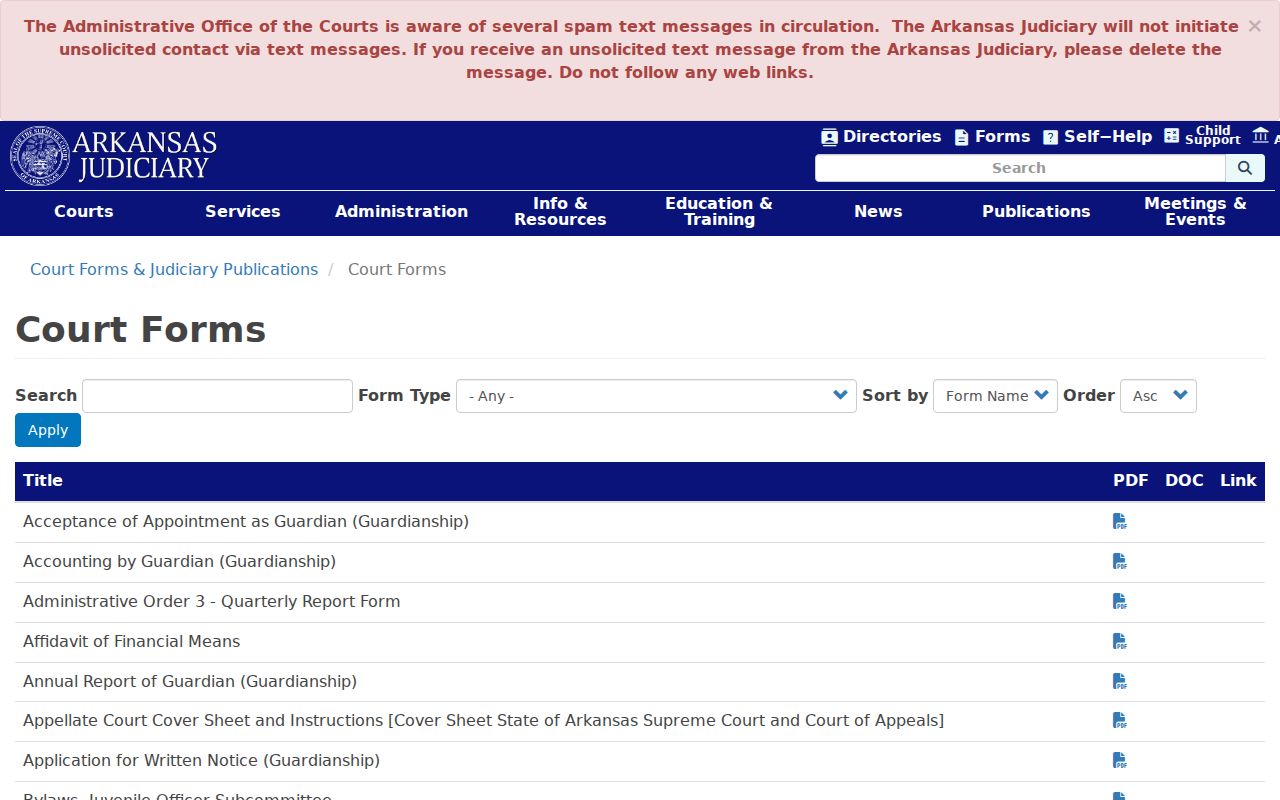
Those forms show process, nothing more. They create no Little River County public warrant list and cannot replace the case record itself. If you are checking your own matter, write down the case number. Then ask the issuing clerk whether the supporting documents are public, restricted, or simply unavailable online.
Arrest Warrants: What They Contain
Even when the warrant document itself stays out of reach, a public Little River County case structure can still give you identifiers and a timeline of events. Keep two things handy: the case number and the court name. Hand those to the clerk when you ask for a status check.
| Case number | Court-assigned identifier, such as official case number. |
|---|---|
| Participant | Name, role, and alias when public. |
| Offense | Code, description, and classification when shown. |
| Court and judge | The issuing court and judicial officer in public entries. |
| Events | Issued, served, recalled, bond, surety, and future settings. |
| Disposition | Judgment, sentence, or other outcome when entered and public. |
Little River Arrest-Warrant Clerk Route
Felony cases in Little River County go to the Ninth West Judicial Circuit Court. Circuit Clerk Lauren Abney's county page lists the office at 351 N. Second Street, Suite 5, in Ashdown, with phone (870) 898-7212. The state directory shows a different number for the office, so confirm the current one before you rely on it. What does the clerk actually do? The office prepares summonses, warrants, orders, judgments, and injunctions for the Sheriff and maintains the case files. That is record-keeping, not judging and not policing. The judge controls the warrant, an authorized officer executes it, and the clerk can locate a public record and walk you through what it says. The Circuit Clerk page details those felony-record and court-process duties.

When you reach the clerk's window, give the case number first. Ask whether the issued entry is still current, whether a later service or recall appears, and which office holds the official document. Clerks explain procedure all day. They cannot give legal advice.
How Warrants Get Served in Little River County
Warrants travel well in Arkansas. Rule 4.2 lets law enforcement execute an Arkansas warrant in any county, and Rules 4.3 and 4.4 cover producing the warrant on request and stating the cause of arrest. The Little River County Sheriff counts arrests on court-issued warrants among official duties, along with court attendance, prisoner custody, and transport. City routing differs by town. Ashdown Police handles its own law-enforcement calls at (870) 898-5640. Foreman has no independent police department and relies on Sheriff coverage, with non-emergency dispatch at (870) 898-7222. Neither number is a substitute for the issuing clerk on court status.
Little River Arrest-Warrant Service Questions
The Sheriff's official page lists (870) 898-5115 and weekday hours of 8:00 a.m. to 4:30 p.m. One county page gives the address as 2115 N. Constitution Avenue while another gives 351 N. Second Street, so call before you drive over. The office posts no dedicated warrant-unit counter, set surrender hours, or booking-release timetable. The Sheriff's official page describes the court-process duties.

Route service and custody questions to the Sheriff. Recall, bond, appearance, and motions belong to the Little River County court that issued the warrant.
Arrest Warrants, Summonses, and Bench Warrants
These papers are not interchangeable. A summons or citation just directs a response. An arrest warrant authorizes custody on the required grounds, and a bench or FTA warrant usually follows a missed court date in Little River County.
| Feature | Arrest Warrant | Summons | Bench Warrant |
|---|---|---|---|
| What it directs | Custody | Appearance or response | Custody tied to missed duty |
| Basis | Reasonable grounds | Citation or court direction | FTA or noncompliance |
| Record clues | Affidavit, issued, served | Date and place to appear | Hearing, FTA, recall |
| Response | Counsel, surrender, bond process | Appear as directed | Issuing-court instructions |
Search Little River Arrest-Warrant Entries First
Search ARCourts is the state's free case portal, and it makes a sensible first stop for a Little River County warrant check. You can search by case number or by participant. Use the case number if you have it. Common names can return matches for several people. When a record opens, the case screen may show the filing date, the court, the case type, its status, the charged offenses, events, documents, and docket details. One caution applies. Search ARCourts is not an official court record, so read an "issued" line together with the later service, recall, bond, and docket entries that follow it. A blank result proves little on its own. It may reflect a restricted case, a spelling issue, a data lag, a different court, or simply no record. Calling works too. Give the clerk the exact case number, the court name, and the newest dated event, then ask whether the arrest warrant is still active and whether any return, service, recall, or bond entry exists. That focused question beats asking for a countywide roster, which Little River County does not publish.
- Issuing court
- The court controlling the warrant.
- Executing agency
- The agency authorized to serve it.
- Return
- A filing concerning execution of process.
- Recall
- Court withdrawal action that needs official confirmation.
Keep whatever the clerk sends, plus any later order or docket update. In Little River County, avoid posting case numbers or personal identifiers online.
Handling an Arrest Warrant in Your Name
There is no single Little River County procedure for handling an arrest warrant in your own name. Start with the basics. Confirm the case number, court, status, and docket. A lawyer can then weigh voluntary surrender, bond, an appearance, or a motion for the case, since a call alone will not stop an arrest and a payment will not make a warrant vanish.
- Identify the case and issuing court in Search ARCourts.
- Confirm status with District Court or the Circuit Clerk.
- Ask whether counsel should arrange the appearance or surrender.
- Ask who sets bond and where and when to report.
- Keep the order or docket proof after court action.
Important: Seek legal advice before reporting; an active arrest warrant may be served during later contact with authorized law enforcement.
Little River Arrest-Warrant Bond Has No Schedule
No Little River County office posts a bond schedule. There is no bond-window hours list, no approved-surety list, no posted surrender fee, and no booking-release time. One dated District Court plan adds a wrinkle. It says that court did not conduct felony bond hearings, which reads as a dated local detail rather than a present-day rule. So ask the court itself. For felony process, that means the Circuit Court or the issuing court, and the question is who sets bond. For traffic or misdemeanor process, call District Court at (870) 898-7230 and ask what action applies. Bond is court-controlled. It is not the same as paying a fine. Before you appear, confirm the reporting address, because Little River County's official pages show two Ashdown address clusters. Write your questions down first. Ask which court issued the Little River County arrest warrant, whether bond is available, and who has authority to set it. Ask whether counsel should arrange the appearance, where and when to report, and which payment or surety forms the court accepts. Ask how a release or recall gets docketed. With no posted schedule, only the court handling your case can answer these. Never treat a fine, a citation payment, or a private payment demand as bond. No payment promises instant release. No official source says a payment erases an arrest warrant either. Refuse gift-card, cryptocurrency, wire-transfer, or secrecy demands. Verify against a published court or Sheriff number. Keep receipts and orders, and ask the issuing clerk when the official record should show the court's action.